You need a plan, require a second opinion, or seek integration ideas
Controls Assessment

Russell Controls provides electrical-controls and data-acquisition engineering as five packages that can be purchased individually or combined: controls assessment, control-panel design and assembly, PLC/HMI software, turnkey controls with commissioning, and data historians.
Five packages, purchased individually or combined — so you pay only for the scope your system needs.
Know what to build before you spend the money.
A documented, factory-tested panel — ready for program download.
Logic and operator interface, bench-verified before it ships.
The complete controls scope — delivered, installed by your local trades, then tested and commissioned on-site.
A live, trending record of your existing system — without touching the underlying controls.
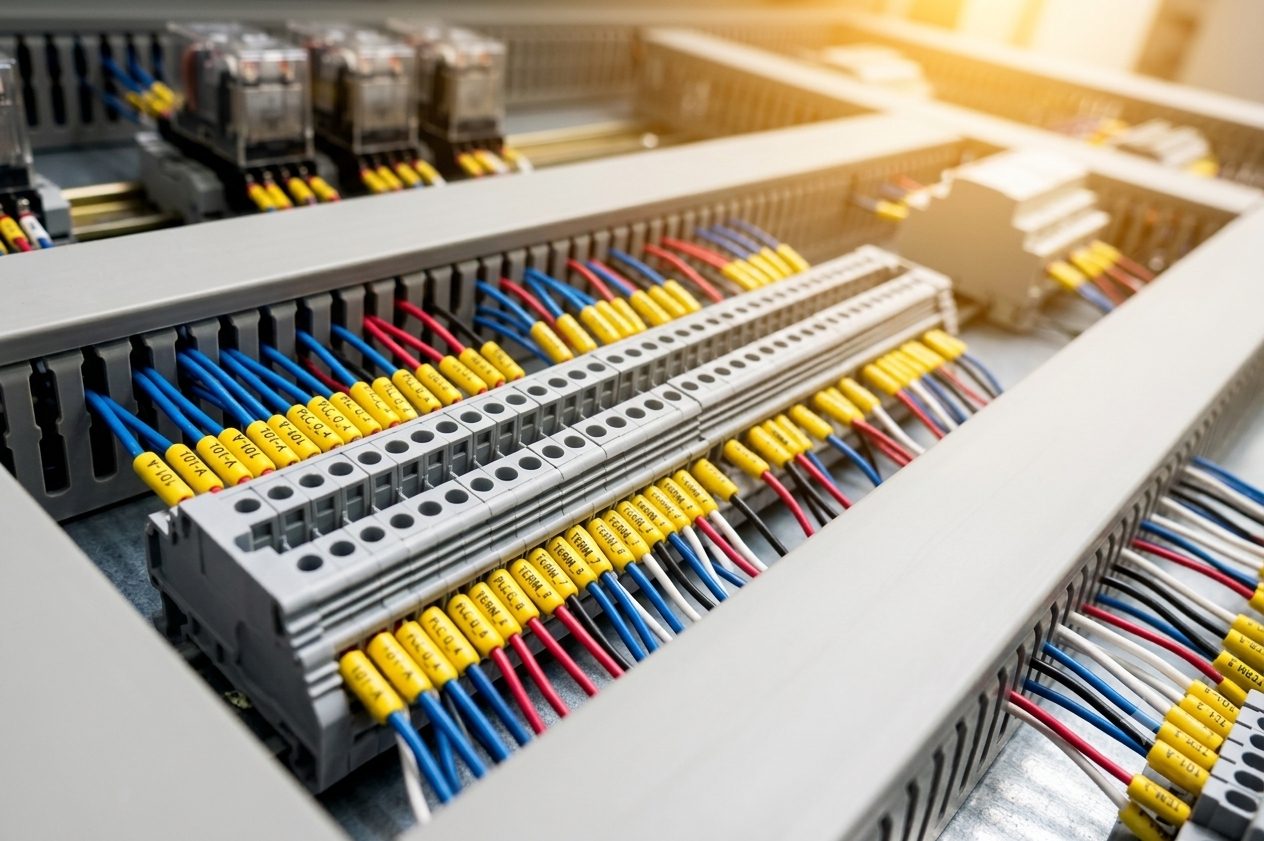
A managed historian — database server, dashboards, alarm notifications, and license management — supported by the firm that integrated it. Sold as a managed service with defined scope, retention, and ownership terms.
After a compatibility review of your controllers, network, and servers, Russell Controls integrates an InfluxDB time-series database with Grafana dashboards and supports it as an ongoing service — on new builds, or on existing systems that need nothing more than a modern monitoring layer.
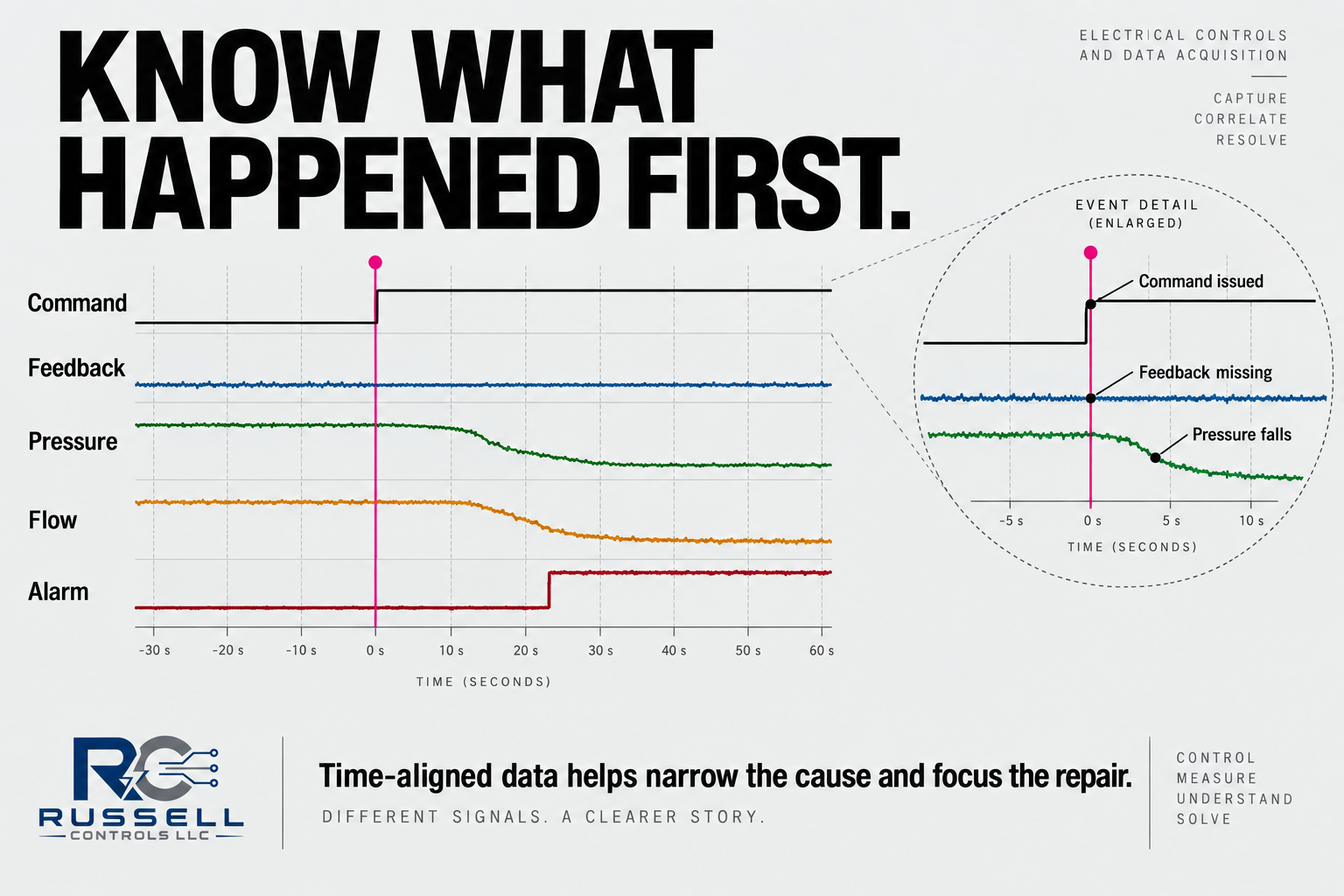
Retention, storage, and backup requirements are defined for each package and documented in the service agreement: the full-resolution retention period, storage capacity sized to tag count and sampling rate, and backup frequency and location.
The customer owns all collected data. At termination, a full export (CSV or InfluxDB line protocol) and the dashboard definitions are delivered at no charge, and hosted copies are deleted on written confirmation.
On-premises hosting supports your compliance program but does not by itself establish CMMC or other compliance — that remains the system owner’s program. Remote access is never enabled without the customer’s written approval.
Published research describes what predictive-maintenance programs achieve when trend data is collected, analyzed, and acted on by maintenance staff. A historian provides the measurements; the savings come from the analysis and the maintenance actions that follow. The figures below are industry context — not guaranteed results of a historian installation.
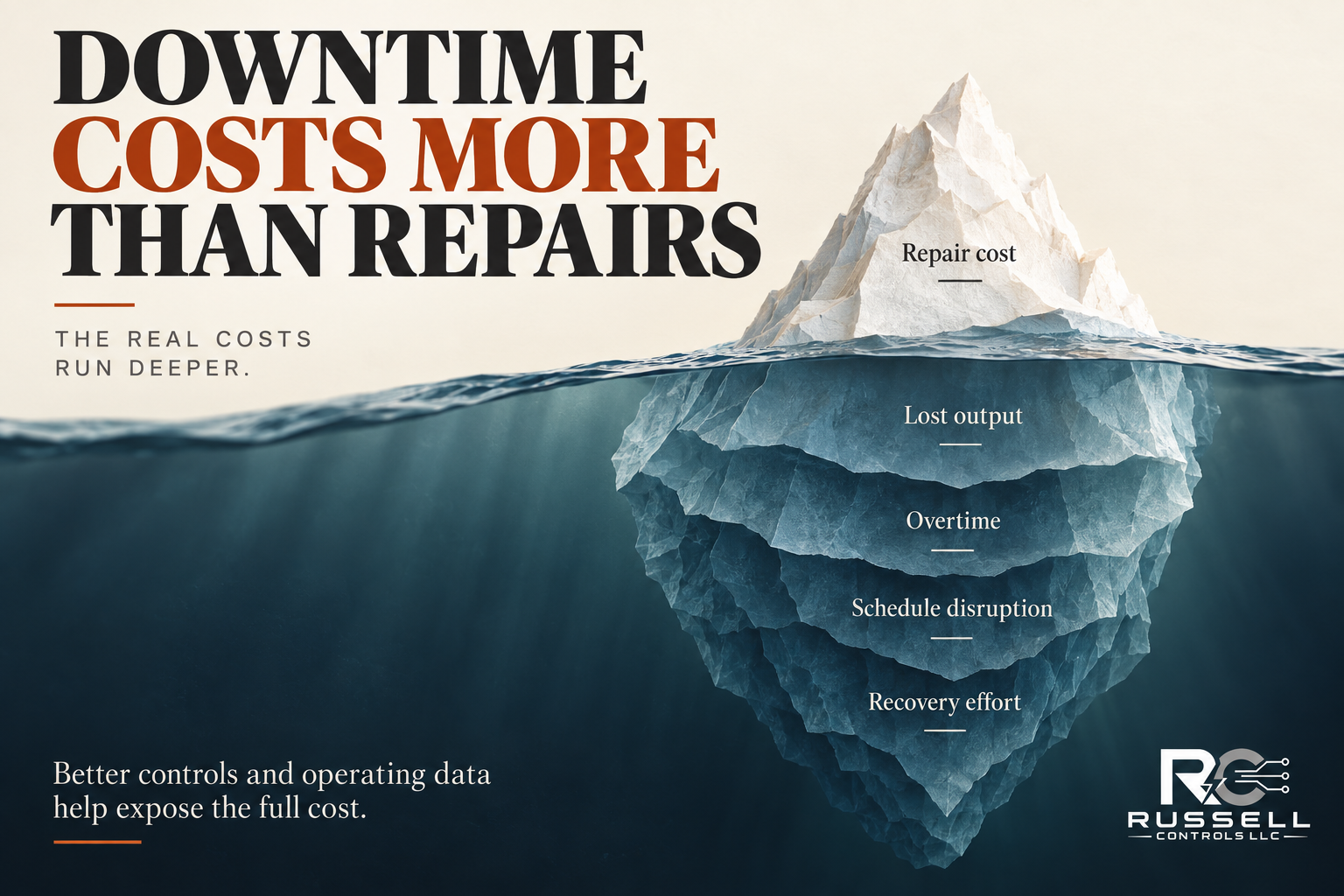
Siemens / Senseye, The True Cost of Downtime (2022). Unplanned downtime costs the Fortune Global 500 an estimated 11% of yearly turnover — on the order of $1.5 trillion annually.
U.S. Department of Energy, Operations & Maintenance Best Practices Guide. A functional predictive-maintenance program can yield savings of roughly 30–40% over a reactive approach.
Deloitte, predictive maintenance / smart-factory analyses. Associates predictive maintenance with roughly a 10–20% increase in equipment uptime and availability.
Plant Engineering, Maintenance Study. Identifies aging equipment and equipment failure as the leading cause of unplanned downtime.
Figures are public industry estimates that vary widely by sector, asset, and plant. They depend on the measurements being analyzed and acted on, and are presented as context — not as guaranteed results for any facility or historian installation. Expected benefits for your system are scoped during a consultation.