
Russell Controls LLC is owned and led by Kevin Russell, a multidisciplinary engineer with expertise in electrical controls, data acquisition, industrial equipment, and software development.
The owner has an educational background in Marine & Software Engineering with ten years in the electrical-controls field.
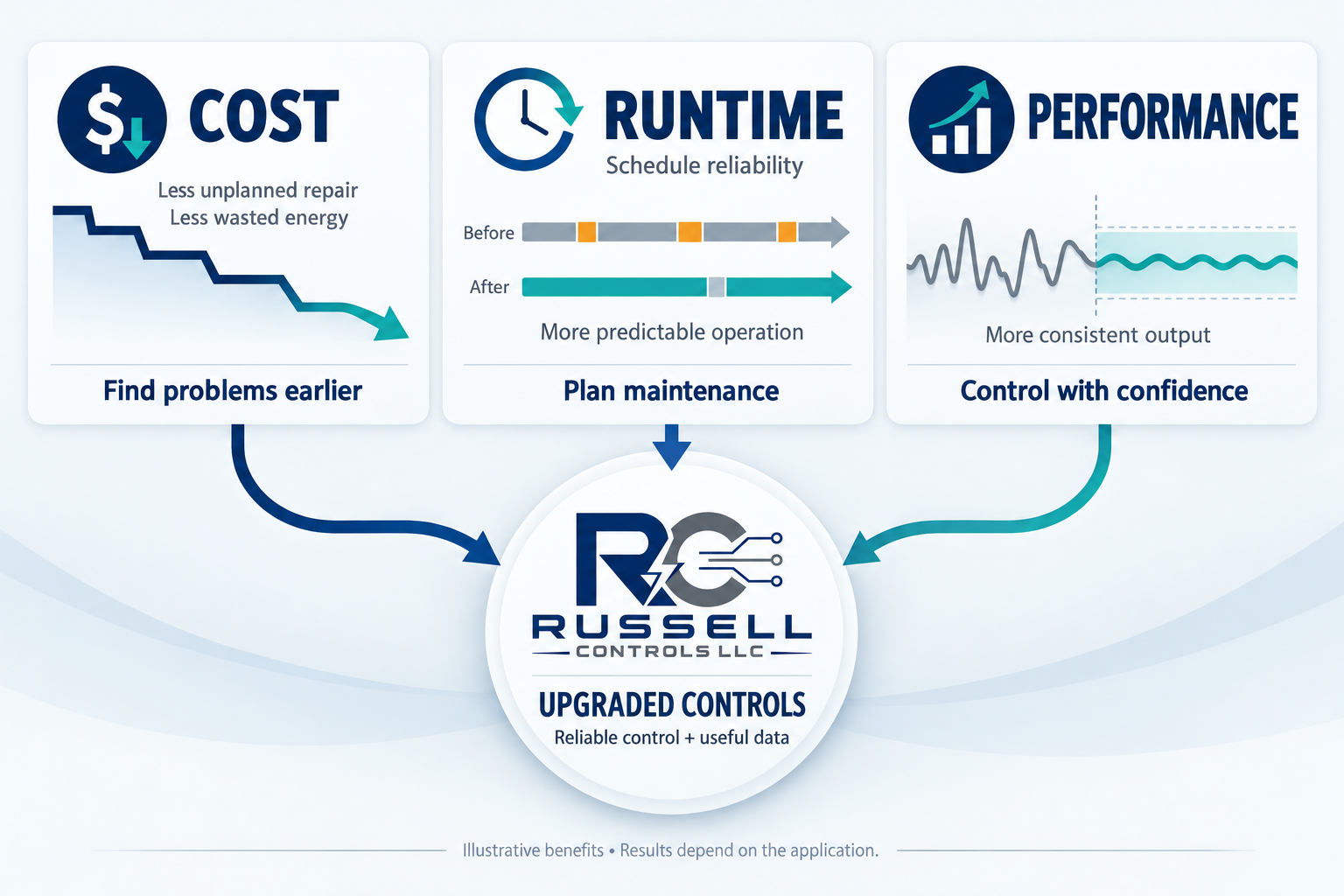
Three threads run through the principal engineer’s career — engineering, technician, and operator work. Together the experience shapes how Russell Controls scopes, builds, and commissions a system.
Electrical controls and data-acquisition engineer at a defense research laboratory — lead engineer for new and upgraded control systems on high-voltage transmitters, antenna motion, and industrial cooling.
Redundant 2 MW transmitters · 50 kW transmitter cooling · 1 kW transmitter · antenna control · +130 kV high-voltage controls · legacy PLC migrations to CompactLogix / ControlLogix · Allen-Bradley, Beckhoff, and Schneider PLCs · InfluxDB, OPC UA, and Grafana historian
Controls and instrumentation technician on automated assembly lines for a medical-device manufacturer — installation, start-up, qualification, and debug of new automation.
Allen-Bradley PLCs with FactoryTalk HMIs · ABB six-axis, parallel, and SCARA robots · Cognex and Keyence vision inspection · encoder-driven conveyors · VFD and servo drives
Recovery boiler and lime kiln operator at a kraft pulp mill — ran the units from the DCS, answered the alarms, and kept the shift record.
Honeywell Experion LX DCS · OSIsoft PI historian · recovery boiler and lime kiln · transmitters, variable-speed drives, actuators, limit switches, level indicators, and silica analyzers at 120–480 V
Fuel-equipment design engineer converting high-pressure utility boilers from coal to natural gas — fan, valve, and piping sizing, and site commissioning for efficiency and NOx. Process control engineer on environmental test systems — ladder logic, Modbus and serial communications, SCADA data recording, and controller documentation.
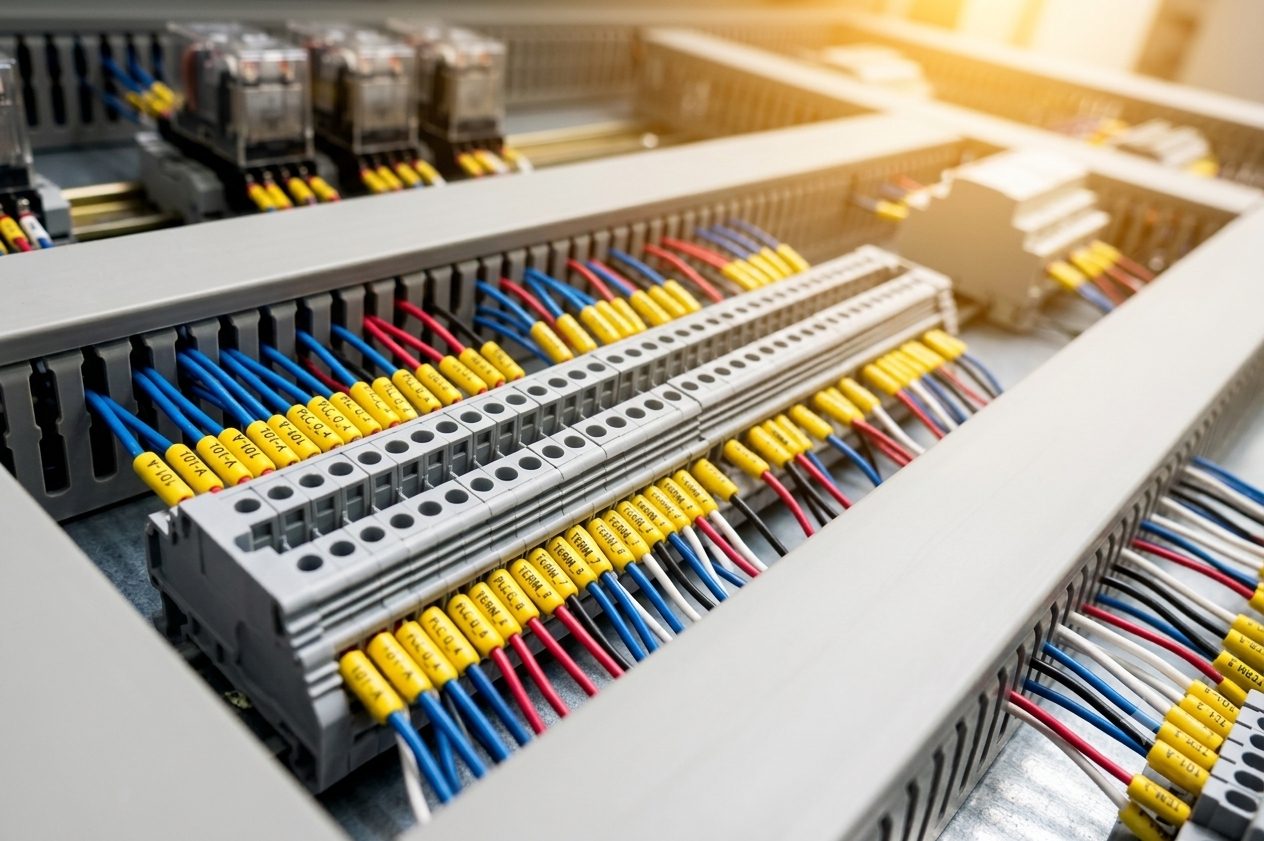
Review drawings, P&IDs, field wiring, equipment behavior, alarms, and operator needs before recommending hardware or software.
Translate the real process into panel layouts, I/O plans, network structure, control narratives, HMI screens, and data tags.
Verify field equipment, electrical connections, process control, HMI operation, and the historian on site — against acceptance criteria agreed up front.
How the outage is run ↓Editable drawings, PLC/HMI source and backups, operator training, and maintenance notes — so your operators and maintenance staff can own the system.
The greatest risk in a controls upgrade is concentrated within the shutdown window. Russell Controls reduces that risk by completing design, programming, testing, documentation, and readiness checks before the outage begins. Commissioning and handover then follow a defined cutover plan with clear decision points, rollback criteria, acceptance testing, and an agreed return-to-service milestone.
Acceptance criteria for both tests are agreed at the end of the assessment, before the build is priced. The two tests answer different questions.
Answers: is the panel built as drawn?
Point-to-point wiring verification against the drawings, device power-up with firmware loaded, I/O forced at the terminals, and a power-quality and load check. Witnessed by the customer on request; test record delivered with the panel.
Answers: does the system behave as specified with real equipment?
I/O verified end to end to field devices; each sequence exercised; alarms and interlocks proven; redundancy and failure responses forced — loss of running equipment, loss of signal, loss of power or communication; operator walkthrough of the HMI. Signed by both parties.